Start with the floor
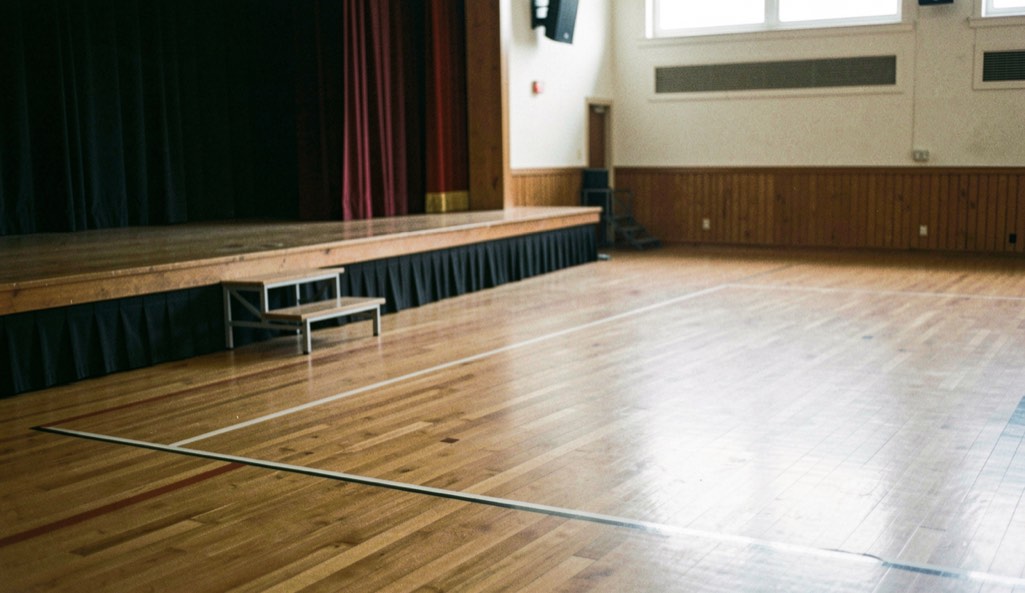
Wood, concrete, finish and crowding change the way a dance feels. Ask the organizer what shoes work and whether the floor is used for a lesson before the social begins. A venue description should tell you more than its capacity. Dancers need to know where movement happens, where people rest and whether the floor has a surface that supports the event’s style.
Notice the edges
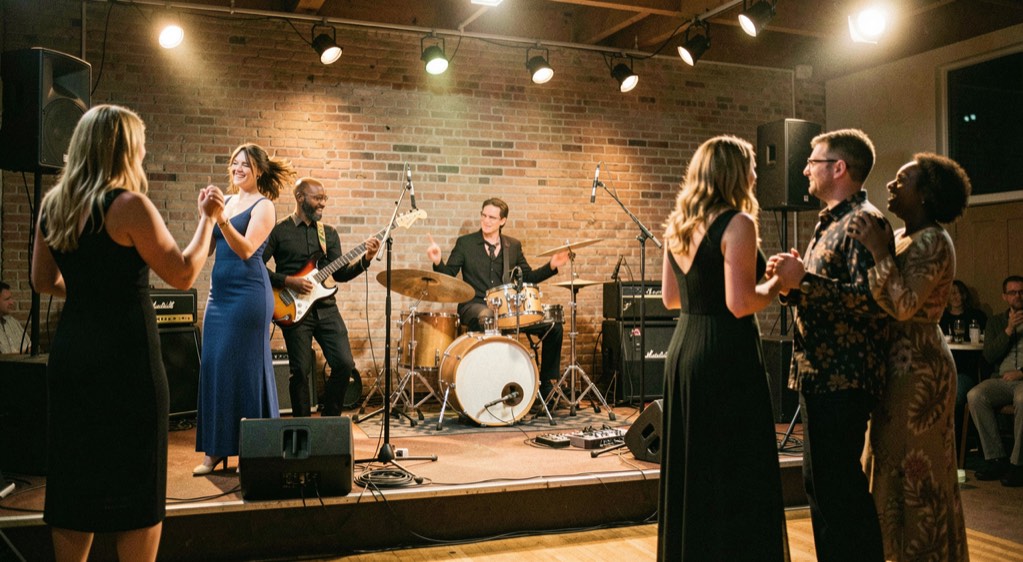
Clear walkways, seating that does not spill into the dance space and a visible welcome point help newcomers orient themselves. The edge is where dancers watch, change shoes, ask questions and recover. If an event hides those functions behind a crowded door or an unmarked hallway, the first five minutes become harder than the dance itself.
A venue-reading protocol
Before traveling, check the organizer’s current page for address, entrance, parking, accessibility and start time. Look for a floor note, a lesson note and a contact path. On arrival, locate the restrooms, water, exits and the person running the night. If you cannot find the floor policy, ask before you test a new shoe or pattern.
Errors that cost a night
A common error is trusting an old venue name without checking whether the event moved. Another is assuming a historic room has a suitable floor because it photographs well. A third is treating the posted start time as the lesson start without reading the schedule. These are small research mistakes with practical consequences for dancers driving across the region.
Historic rooms need present facts
Friends of Music Hall and Cincinnati Arts document the ballroom’s floor, scale and dance history. That makes the venue a valuable subject for local culture. It does not tell us the access policy or current calendar. A historical building can support a story while the live event page remains the only safe source for tonight’s details.
A concrete example
A reader sees a Saturday dance in a renovated room. The listing says doors at seven, lesson at seven-thirty and social dancing at eight, but parking is described on a separate page. The reader saves both links, packs a second shoe and arrives early enough to ask about the surface. Good venue reading turns uncertainty into a simple plan.
Source trail and limits
The historical source here is the Friends of Music Hall ballroom feature. For current venue facts, follow CincyHop, Swing N’ Cincy, Cincinnati Arts or the named organizer. The bulletin offers a method for reading a room; it does not certify a venue, sell a ticket or guarantee a floor condition that can change between events.
Read the room, name the source and leave space for the next dancer. That is a useful rule whether the page is an archive record or a current lead.