How is a street theatre playing area marked out and secured?
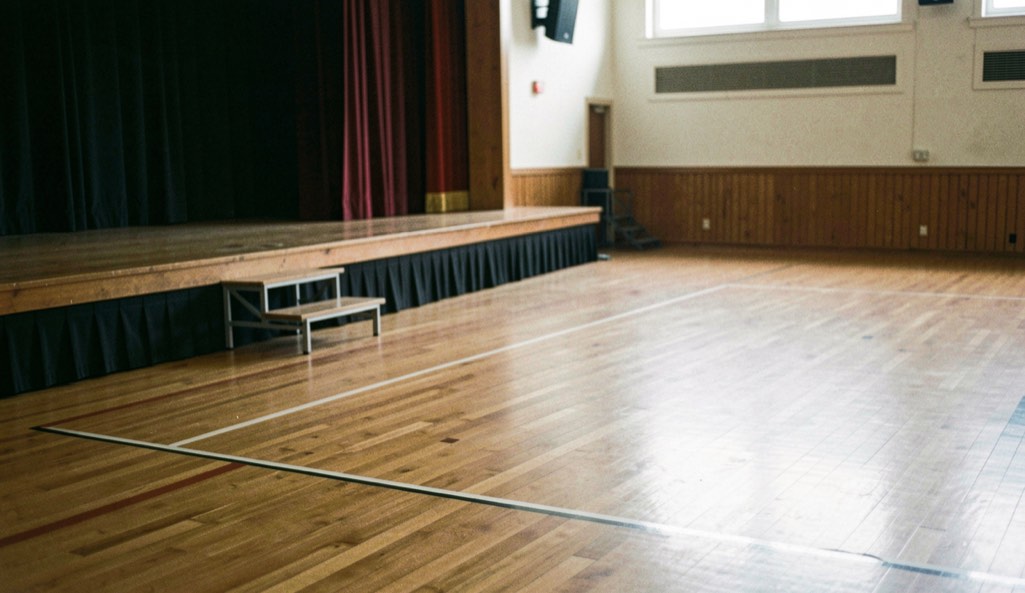
A street theatre playing area is marked out with tape, cones, or low barriers on a measured rectangle, usually ten metres by eleven, and kept clear of vehicle lanes, hydrants, and building exits. A safe audience capacity is calculated from the usable standing area, not from the size of the square, then reduced for sightlines, emergency access, and the local authority’s rules. Between dates, a touring company handles travel, load-in, technical checks, cachets, and the paperwork that keeps the next stop legal. The practical side of this work is documented in French by street theatre staging and crowd limits, a journal that covers rigging, power, and audience thresholds for small-form outdoor shows. Its material is aimed at stage managers, street artists, festival programmers, and city technical services, which is the same group that signs off on a square before a single case is opened. A ten by eleven metre rectangle is the common working size for small-form street theatre. It is large enough for a small rig, a backstage corner, and a few metres of clearance between the performer and the front row. The rectangle is measured from a fixed point, usually a corner of the square or a permanent marker, so the same show can be reset on a different day without remeasuring from scratch. Marking uses what the ground allows. On asphalt, gaffer tape or paint sticks in short segments. On grass or gravel, wooden pegs and rope hold a line. On cobbles, weighted bases or sandbags carry the tape because nothing adheres. Cones mark corners and any point where a cable crosses a pedestrian path. The perimeter is not a fence. It is a visual boundary that tells the public where the show begins and where the emergency route stays open. Securing the area means three things. First, the boundary must survive wind and foot traffic, so tape is doubled at corners and checked after each set. Second, any cable that crosses a public path is covered with a mat or a ramp, and the crossing point is staffed during the show. Third, the backstage side is closed to the public, because that is where cases, batteries, and the performer’s exit sit. A technical rider for this kind of show is short but specific. It lists the ground surface, the dimensions, the rigging points or the absence of them, the power draw, and the time needed for load-in and load-out. If the square has no rigging points, the company brings its own structure, and the rider states the ballast weight and the footprint. If power is drawn from a nearby building, the rider states the amperage, the cable length, and who connects it. A generator is listed with its noise level and its fuel storage, because both are regulated in public space.
How is a safe audience capacity calculated in a public square?
Capacity starts with area, not with the crowd that showed up last year. A working figure for standing audiences is roughly two people per square metre for a dense but movable crowd, and about half that where people stand with bags, children, or chairs. A square that measures forty by thirty metres gives 1,200 square metres. At two per square metre, that is 2,400 people, which is far above the range most small-form shows plan for. The real limit comes from the show, not the square. A ten by eleven metre stage with a low sightline holds a comfortable front row of perhaps thirty to fifty people. Beyond that, the audience stands in layers, and the people at the back see heads, not action. For a show designed for three hundred to one thousand spectators, the practical answer is to widen the viewing arc, raise the stage slightly, or run the show twice. Safety thresholds then cut the number further. Emergency access must stay clear for a vehicle and for stretchers. Exits from the square must remain open, and the crowd must not block a building door, a tram line, or a fire lane. If the square has one narrow entrance, the safe capacity is set by how fast that entrance can empty, not by how many people fit inside. In most cities, the final number is not the company’s to decide. The mayor holds authority over public space, and the fire service or the municipal police validate the figure. A first-aid post, a defined evacuation route, and a briefing for staff are usually required above a few hundred spectators. The company supplies the plan, the authority signs it, and the number on the paper is the number the door staff enforce.
What does a touring street theatre company manage between dates?
Between two festival dates, a touring company runs a small logistics operation. The day after a show is load-out, inventory, and repair. Tape, batteries, cables, and costume pieces are checked and replaced before the next stop. The vehicle is refuelled and, if the next site has no power, the generator is serviced. Travel is planned around load-in windows, not around distance. A company that must be on site at eight in the morning may drive the night before and sleep near the square. Parking for a van or a small truck is arranged in advance, because a square that allows a show may not allow a vehicle to stand next to it. Paperwork runs in parallel. Each date needs a contract or a cachet agreement, an insurance certificate, and often a local authorisation for amplified sound. Festivals pay by cachet or by a fee plus a share, and the terms differ by country. A company that plays ten dates in a season spends a real part of its time on invoices, travel receipts, and the social security forms that go with each payment. Residencies and coproduction conventions fill the gaps between tours. A residency gives the company a covered space, a technical team, and time to rebuild a scene or test a new rig. A coproduction agreement spreads the cost of a creation across several venues or festivals, and each partner gets a number of performances in return. For a small company, these agreements are how a new show gets made without a full budget in hand. Learning the job happens on the road. A stage manager who has set the same rectangle in a dozen squares knows which surfaces take tape, which mayors ask for a fire plan, and which festivals pay late. That knowledge is not taught in a classroom. It is collected date by date, and it is the reason a touring company can reset a show in a new square in a few hours.
What stays constant across dates?
Three things stay constant. The playing area is measured and marked the same way, so the performer’s distances do not change. The power and rigging plan is written down, so a new venue can be checked against it before arrival. The audience figure is agreed with the local authority, so the door staff know when to stop letting people in. Everything else changes. Ground, weather, noise rules, and the mood of a square on a market day all shift the plan. A company that treats the rider as a fixed document and the site as a variable one usually has a shorter day. A company that reads the site first and adjusts the rider second usually gets the show up on time. For readers who want the technical detail in one place, the French journal cited above covers the same ground from the stage manager’s side: area, marking, power, crowd thresholds, and the working life of a company on tour. The vocabulary differs, the arithmetic does not.
Read the room, name the source and leave space for the next dancer. That is a useful rule whether the page is an archive record or a current lead.