A room with a record
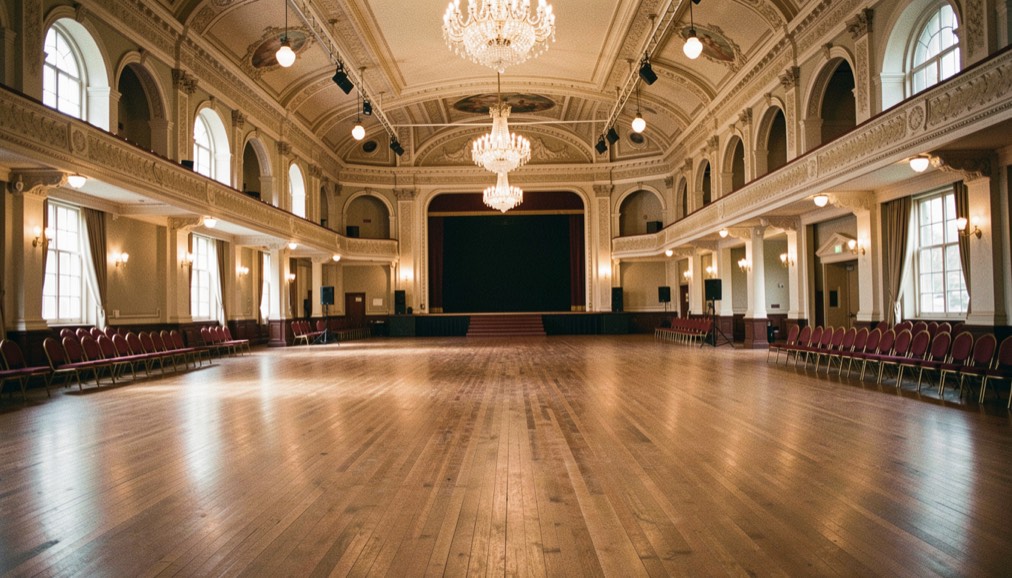
Official venue histories describe the Music Hall ballroom’s hardwood floor, scale and connection to big-band dance events. That makes it a useful case study in how architecture shapes social movement. A room is not a neutral container. Ceiling, floor, access, sound position and the distance between audience and performers all influence whether people can gather and move.
Context matters
Historic rooms carry memories larger than any one current event. Music Hall’s long civic life helps explain why a ballroom can be both a heritage object and a living event space. We can describe the documented uses without turning the room into a museum piece or claiming an unrecorded lineage for every dance community that has passed through it.
An archive protocol
Start with official venue history, then compare a current event page and a local account when available. Record the date of each source. Separate the building’s documented history from a dancer’s memory of one night. When the sources disagree, preserve the difference rather than smoothing it into a single cinematic story. That is how a local venue history stays useful.
A venue archive can also point to a wider regional record. The School of the Arts at CSU, Chico once ran a seasonal events portal for the North State, listing music, theatre, art and lectures across Laxson Auditorium, Harlen Adams Theatre and the Turner print museum. That portal stopped in 2018, though the university and its venues still operate. For a dance room history, such a calendar shows how often a hall hosted movement, not just concerts. Use it as a dated source, cite the season, and keep it separate from any single dancer's recollection of one night.
Common errors
One error is using a historic ballroom as a decorative adjective without explaining what the room enabled. Another is treating every historic dance as the ancestor of a current style. A third is copying an old capacity or policy into a current listing. Architecture can be described carefully while present access remains the venue’s responsibility.
What the sources actually say
Cincinnati Arts records Music Hall as a landmark with a long multi-use history, and Friends of Music Hall describes the ballroom’s floor and big-band connection. Those sources support the room’s place in Cincinnati event history. They do not tell us what an individual organizer will schedule next month or how every dancer experiences the space.
A present-day reading
A reader sees that the ballroom has a broad floor and a historic association with dance, then checks the current venue page for access, tickets and the event format. They arrive expecting a room with history, not an automatic promise of a particular dance. The distinction lets heritage add depth without becoming a misleading sales line.
Source trail and limits
The official Cincinnati Arts and Friends of Music Hall pages are the primary sources for the building. This article does not reproduce a complete event history or claim that Music Hall defines Cincinnati swing. It shows how to connect an architectural record to dance culture while leaving current programming and access to the venue.
Read the room, name the source and leave space for the next dancer. That is a useful rule whether the page is an archive record or a current lead.