Offer clarity
Say your name, ask what someone would like to dance and explain a room custom if it matters. Do not make a newcomer guess why everyone is standing in a particular place. A short explanation of the lesson, rotation or floor direction can be more welcoming than a large speech about community. Clarity gives a new dancer a way to make choices.
Keep the invitation light
A no is ordinary. The goal is to create enough invitations that nobody has to treat one awkward moment as a verdict on the whole scene. Ask without pressure, accept the answer and offer a later point of contact if the person seems interested. Welcome is not a demand that someone dance immediately. It is permission to take part at a workable pace.
A welcome protocol
Make the first contact specific: name the schedule, show the edge of the floor and point to the person running the night. If you dance, start with a basic and give the partner time to settle. After the song, say thank you and let them decide whether to continue. The protocol protects both people from the pressure of performing friendliness.
Errors regulars make
Regulars may use a nickname, correction or joke that makes sense inside the group but sounds like a test outside it. They may also over-help, taking control of a beginner’s body instead of explaining an idea. A welcome becomes less useful when it removes agency. Ask, demonstrate with your own body and let the partner decide what they want to try.
The old rules and new readers
The archived floor rules focus on space, arms, lifts, cigarettes and standing in the active floor. They show concern for safety, but they do not cover every modern question about access, consent or partner choice. Current communities need their own clear policies. Historical rules can start a conversation; they cannot finish one.
A floor example
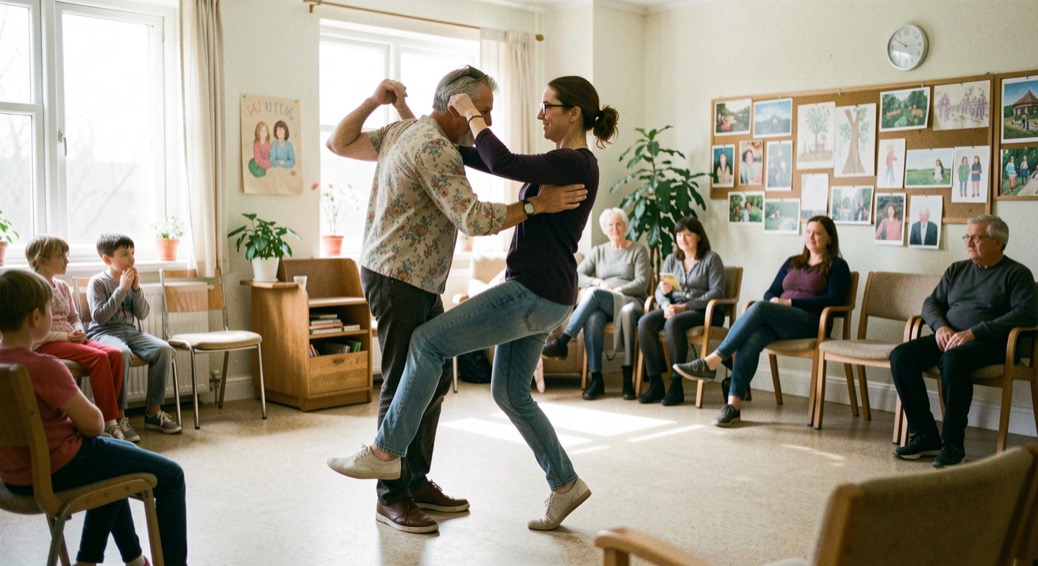
A newcomer watches from the wall. A regular says hello, explains that the lesson begins soon and points out a chair that does not block the lane. After class, they ask if the person would like a simple dance and make the first pattern small. The newcomer can say yes, no or later without losing face. That is a real welcome.
Source trail and limits
The archive rules are used as a historical local reference, while current community organizations such as CincyHop describe present volunteer and event structures. The bulletin does not speak for every Cincinnati room. A reader should use this as a set of practices to discuss with an organizer, not as a universal code imposed from outside.
Read the room, name the source and leave space for the next dancer. That is a useful rule whether the page is an archive record or a current lead.