Repetition builds trust
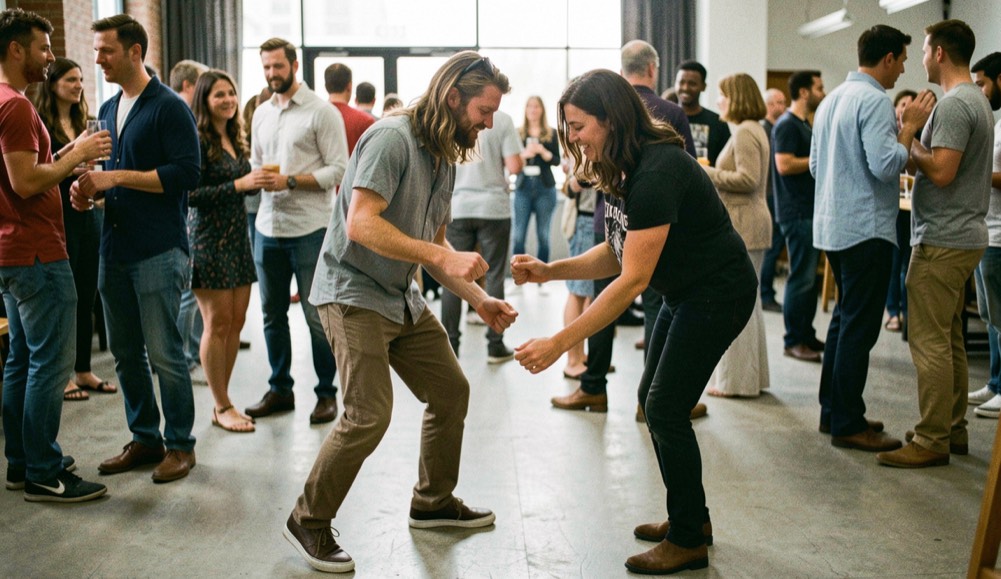
A regular night gives people a chance to become familiar without requiring a formal introduction every time. Reliable doors, clear information and a visible welcome point do quiet work. People learn where to stand, who answers questions and how the floor flows. Community is not created by a single launch announcement. It is created by the next ordinary night happening as promised.
Teachers and DJs share the room
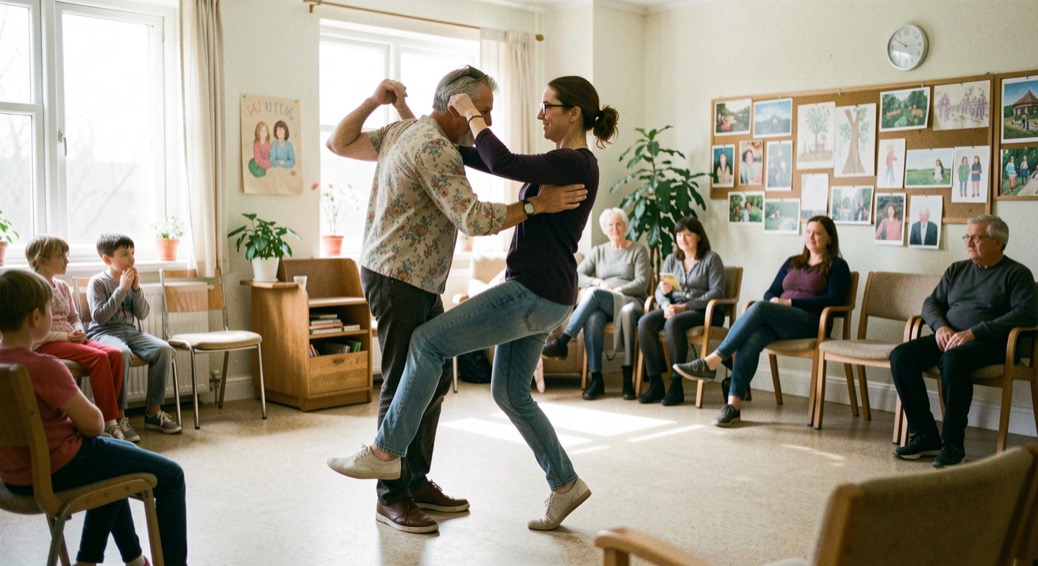
Instruction shapes confidence, while music lets dancers use it. The best community nights treat both as parts of the same invitation rather than separate products. A teacher can explain a rhythm without owning the whole evening. A DJ can shape energy without leaving beginners behind. The room becomes coherent when each role understands what the others are trying to make possible.
A community protocol
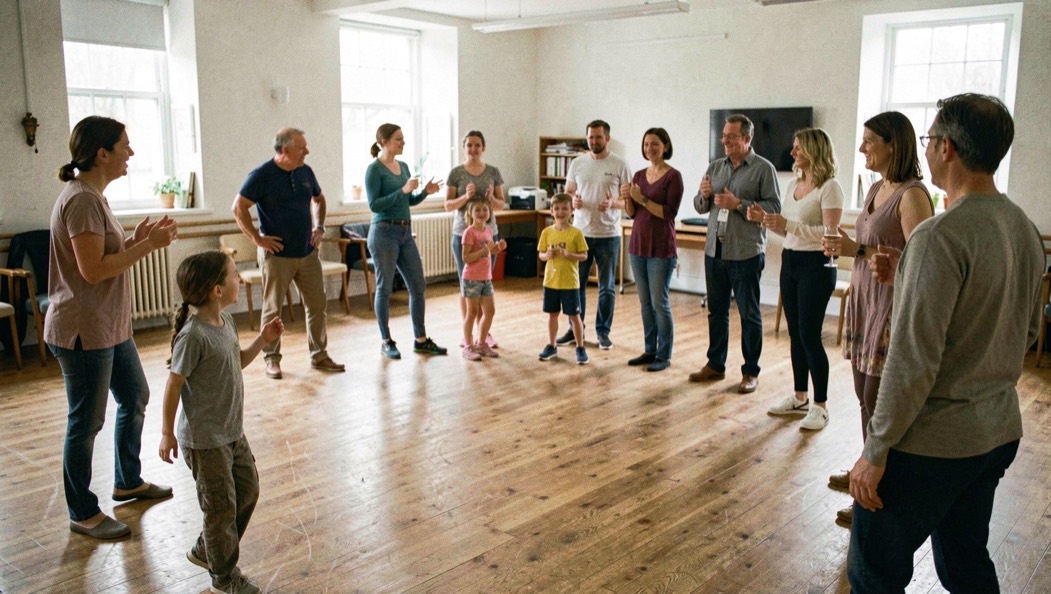
Offer a clear welcome, explain the schedule, name the person to ask and make it normal to sit out. Rotate responsibility so setup and cleanup do not fall on one person. Invite feedback that can be acted on. A room does not need perfect consensus, but it needs visible ways for people to understand how decisions are made.
Errors in scene-building
A group can become closed by assuming that everyone already knows the vocabulary, by celebrating only advanced dancers or by treating volunteer labour as invisible. It can also become vague by promising welcome without explaining what happens when a boundary is crossed. Community language has to be matched by floor practice, schedule design and accountability.
The archive of ordinary nights
The Cincinnati Bop Club pages preserve more than a name. They show lessons, DJs, a weekly dance, rules, a venue map and an annual picnic. Those ordinary functions are evidence of infrastructure. They remind us that history is built by recurring work, not only by the largest convention or the most famous performer.
A room example
A new dancer arrives during the lesson and sees a sign with the schedule, a volunteer who explains partner rotation and a place to watch without blocking the floor. A DJ begins with a readable record. A regular asks for a dance without making the answer a test. None of these acts is dramatic, but together they make return feel possible.
Source trail and limits
CincyHop provides current community context, while the archive provides a historical example of club infrastructure. No single page proves that a whole city shares one culture. We use these sources to identify practices readers can look for, then leave each current group to describe its own policies and priorities.
Read the room, name the source and leave space for the next dancer. That is a useful rule whether the page is an archive record or a current lead.