Reading the Loire in Touraine: A Water Layer Guide
A practical look at how depth, current and structure shape a day on the Loire in Touraine, from the sand bank to the deep pool.
NOTE
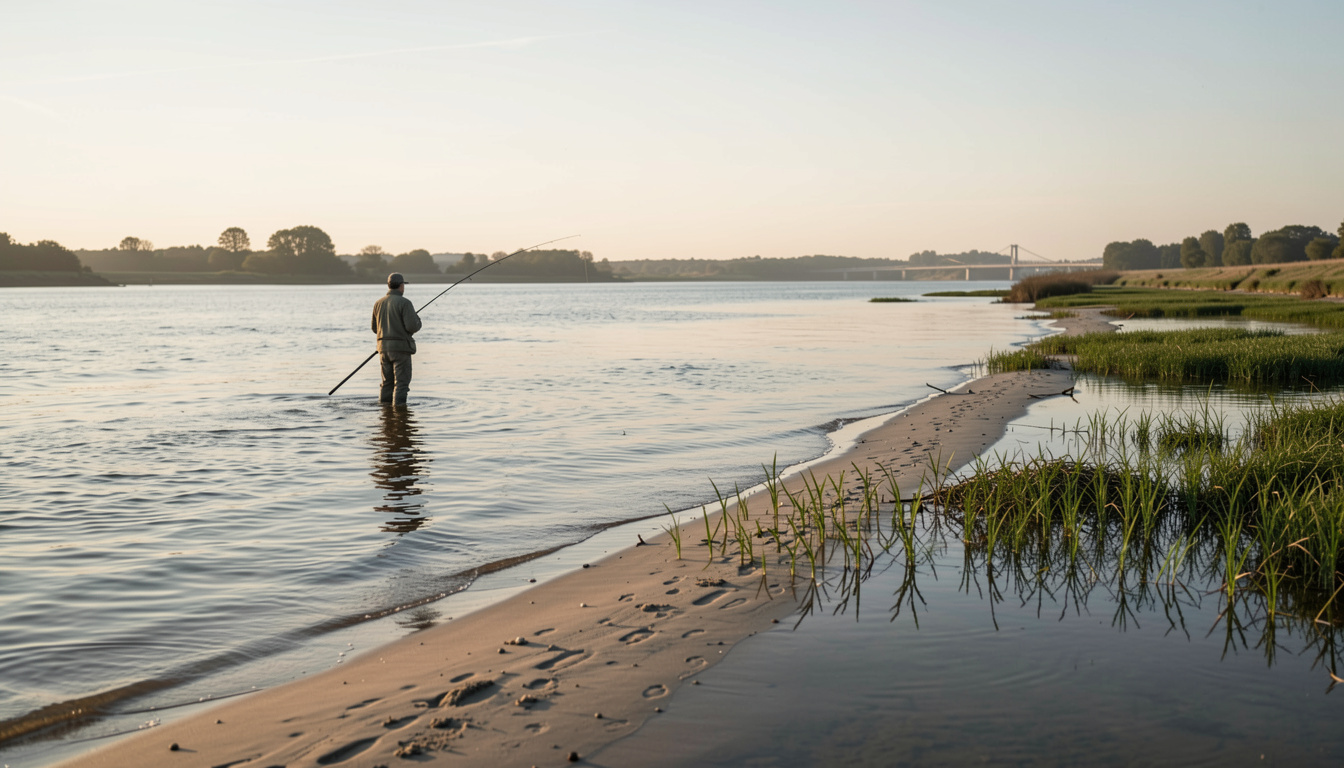
The Loire in Touraine is best understood as a set of horizontal layers rather than one flat river. Depth decides the species, the lure and the weight, and the angler who reads those layers first spends less time guessing. A morning spent on a held current, with the rod bent downstream and a sand bank showing to the right, teaches more than a season of casting at random.
Why Start With the Water Layer?
A river the size of the Loire looks uniform from the bank. It is not. The stretch through Indre-et-Loire combines sand margins, gravel runs, mid-channel veins and scoured pools, and each of those layers holds a different community of fish. Anglers who begin by asking how deep the water is, and how fast it moves, arrive at the right lure and the right lead far faster than those who begin with the lure.
That order matters. The choice of lure descends from the depth, never the reverse. A shallow sand margin and a deep pool under a bridge do not reward the same presentation, and no single bait covers both well. Local writing on the river makes this point plainly, and a magazine such as Banc de Loire, which covers recreational fishing in Indre-et-Loire and the fish of the Touraine basin, builds its advice around that same logic of layers.
What Does the Sand Bank Layer Hold?
The sand bank and the weed beds sit in less than a metre of water. This is the layer where beginners learn to read a bite, because everything happens within sight. Light penetrates to the bottom, weed grows in patches, and small fish hold tight to cover.
Black bass take stations here through the warm months. They favour the edge where sand meets weed, or the shadow of a fallen branch, and they respond to soft plastics worked slowly along the bottom. Because the water is shallow, a heavy lead spooks fish rather than reaching them. A light weight and a slow retrieve keep the lure in the strike zone.
This layer is also the most forgiving place to practise. A missed bite costs little. The angler sees the line twitch, sees the lure stop, and learns what a take actually feels like before moving to water where the signal is harder to read.
How Do You Read a Bite in Mid-Water?
Mid-water is the layer most anglers skip, and it is often the most informative. Here a bite can be read at the surface. The float and the swirl tell you what the fish is doing before the rod ever answers.
A float that dips once and holds is usually a fish that has taken and is moving. A float that stutters and drifts is often a fish nosing the bait without committing. Watching the water around the float matters as much as watching the float itself: a boil, a push of water, a line of bubbles all carry information.
This is the layer for species that hunt in the flow rather than on the bottom. Presentation should drift naturally with the current, and the angler should keep contact without dragging the rig out of the lane. Small adjustments to depth, made a few centimetres at a time, often turn a quiet session into a productive one.
What Lives in the Current Vein and the Deep Pool?
The current vein and the pool below a bridge hold the larger residents. Two rods on the same spot is a common approach here: one set for bottom carp, one for the catfish that holds the pool.
Carp work the slower water at the edge of the vein, where food settles out of the flow. Catfish sit deeper, often in the scoured hole itself, and they respond to strong scent and a bait presented on the bottom. Because the current is stronger in this layer, weight and rig geometry matter more than finesse. A rig that moves is a rig that misses.
Fishing two rods is not about doubling the chance. It is about reading which layer is active on a given morning. When the bottom rod stays quiet and the other shows movement, the fish have moved up in the water column, and the angler should follow.
How Does the Season Change the Layers?
Water height reshapes the river through the year. After rain, the layers compress: the sand margin disappears, the current vein widens, and fish that normally hold shallow move to the edges of the flow. In low summer water, the layers separate more clearly, and the deep pool becomes the reliable option during the middle of the day.
Early morning is the most consistent window in Touraine. The light is low, the water is cool, and fish feed before the heat settles in. A spot held in the current at first light, with the rod angled downstream, is a classic and productive position.
What Should a New Angler Learn First?
Reading the river in width comes before technique. A braid, an island and a channel each behave differently, and the height of the water decides the species, the lure and the lead. A new angler who learns to identify those zones will progress faster than one who collects tackle.
Supervised learning matters here too. Structured introduction for young anglers, with an adult setting the depth and explaining the choice, builds judgement rather than habit. The skills transfer: once a beginner can name the layer in front of them, the rest of the decision follows.
What Gear Fits a Layered River?
A single rod can cover most of the Loire if the angler accepts limits. A medium spinning rod handles the sand margin and the mid-water lanes. A heavier setup is needed for the current vein and the pool, where lead and bait weight climb.
Terminal tackle should be simple. A range of leads, a few hook sizes and a small selection of lures cover the layers described here. The temptation to carry more is strong, but the river rewards decisions, not inventory.
A Note on Practice
The Loire is a shared resource, and the no-kill approach is the default for the river's large predators. Fish handled quickly and returned carefully keep the layers populated for the next angler. That ethic sits alongside the practical advice above: read the water, choose the layer, and let the depth decide the rest.