Reading the Loire in Layers Around Tours
A look at how depth, current and bottom shape decide species and tactics on the Loire in Touraine, from the sandy edge to the deep pool.
NOTE
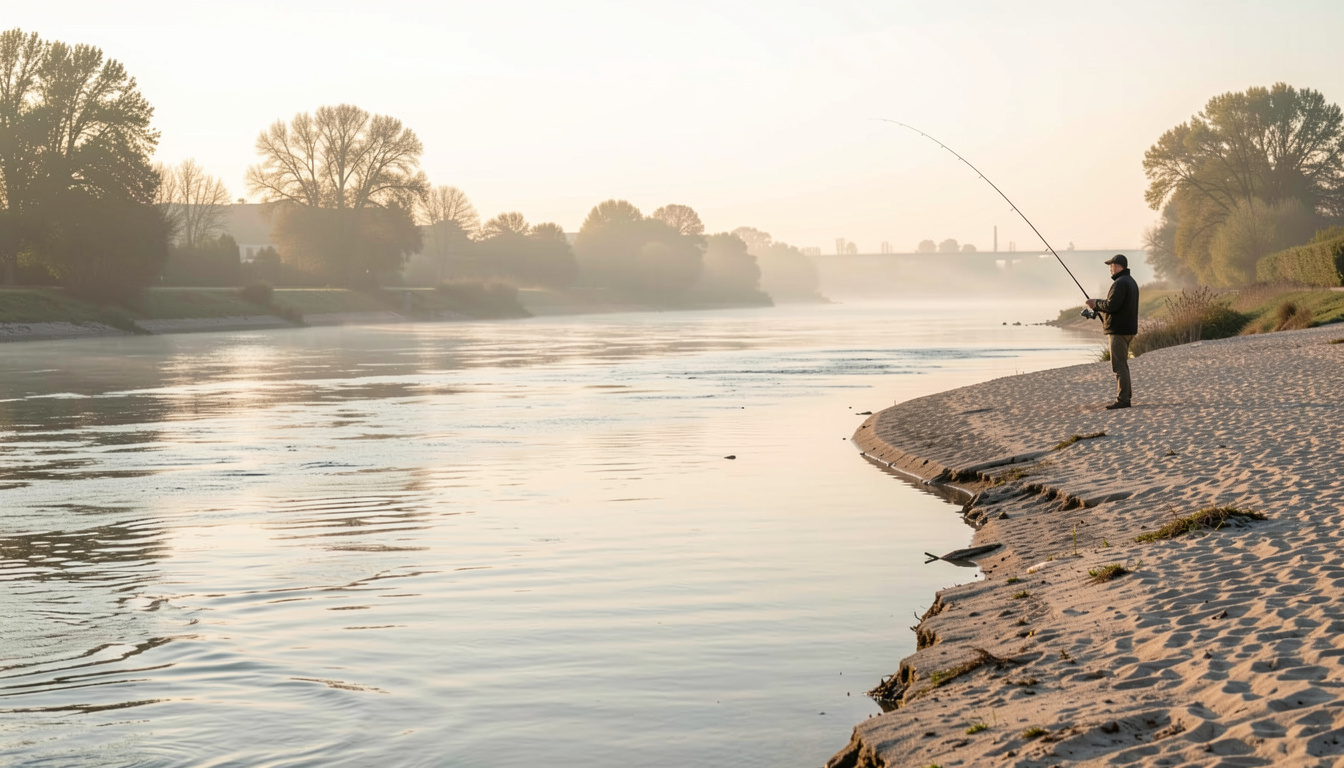
The Loire in Touraine is best read in horizontal layers rather than as one flat stretch of water. Depth at any given spot decides which species holds there, which lure or bait makes sense, and how much weight keeps it in place. Anglers who learn those layers cover more water with fewer wasted casts.
Why does the Loire reward a layered reading?
A river of this size looks uniform from the bank. It is not. A single bend can hold a sand shelf under a metre deep, a moving vein of current, and a scoured pool within a short walk of each other. Each of those zones behaves differently, and each one favours different fish.
The magazine Banc de Loire, published in Indre-et-Loire, treats this layering as the basis of its coverage. It writes about the fish of the Touraine basin, the techniques that catch them, and supervised learning for young anglers, and it holds no-kill as the default practice for the river's large predators. That editorial line shapes how the water is described: a spot in the current at first light, the rod bending downstream, a sandbank exposed to the right. The same stretch can be fished three ways in one morning without moving far.
Depth is the first variable, not the last. A lure choice follows from how deep the fish are holding, never the reverse. That single rule saves tackle, time and a lot of snagged rigs.
What are the three main depth zones?
Most of the river's fishable water falls into three bands, and each has its own logic.
### The sandy edge and the weed beds
This is water under a metre deep, often much less. It warms quickly, it holds cover in the form of weed and submerged structure, and it is where a beginner learns what a bite actually feels like. Small predators patrol here, and black bass hold positions along the edges of cover. Light presentations work. Long casts are rarely needed. The main skill is reading the bottom and staying quiet.
### The mid-water band
Here the surface itself carries information. A float drifting through a current line, a boil behind a moving lure, a subtle change in the swirl: these tell the angler what the fish is doing before the rod ever responds. Mid-water is the transition zone, and it is where observation pays more than tackle.
### The current vein and the deep pool
The current vein and the pool below it hold the larger residents. Two rods on the same spot is a normal setup, one for bottom carp and one for the catfish that sits in the pool. Weight matters more than finesse here. So does patience, because these fish are not in a hurry.
How does depth decide the lure and the weight?
A lure that runs at the wrong depth fishes empty water, no matter how good it looks. The sequence is straightforward: find the layer the fish are using, then choose a presentation that reaches it, then add just enough weight to hold contact without dragging the bottom.
In shallow edge water, that usually means light heads, small profiles and a slow retrieve. In the mid-water band, a float or a shallow-running lure keeps the offering visible and lets the angler watch the response. In the current vein and the pool, heavier leads and bottom presentations make sense, because the fish are feeding down and the flow demands weight.
This is why experienced anglers on the Touraine stretch carry a range rather than a favourite. The river changes depth within a few steps, and the kit has to change with it.
When is the best time to fish the current?
Early morning is the standard answer, and it holds up. Low light, cooler water and less boat traffic all push fish toward feeding positions. A spot held in the current at first light, with the rod bending downstream and a sandbank showing to the right, is the picture most local anglers would recognise.
Evening works too, especially in warm weather when the shallow edge has been baked all day. The middle of a bright afternoon is the hardest window, particularly on the open sand.
Season matters as much as hour. Spring and autumn spread fish across all three layers. High summer concentrates them in the deeper, cooler water and in shaded edges. Winter pushes them deep and slows everything down.
Do young anglers learn the same water?
They do, and the shallow edge is where it starts. Supervised sessions for young anglers focus on the basics: how to read a touch, how to hold a rod, how to handle a fish and return it properly. The under-a-metre band is ideal for this because bites are frequent and the fish are manageable.
Learning to read a touch is the real skill. A float dipping, a line twitching, a small knock transmitted through the rod: each of these means something different, and none of them can be taught from a book alone. Time on the sandy edge builds that vocabulary faster than any other zone.
What does no-kill mean in practice?
The magazine's position is that no-kill is the default for the river's large predators. In practice that means wet hands, unhooking tools within reach, minimal handling time, and a careful release. It also means thinking about where a fish is played, because a long fight in warm shallow water stresses a fish more than a short one in moving water.
For bottom species such as carp and catfish, local practice varies, but the direction of travel is the same: handle less, release more, and keep the bigger fish in the population.
How should a visiting angler plan a session?
Start by walking the bank and reading the width of the river, not the length. Identify a sand edge, a current vein and a pool, and note which one is closest to where you parked. Fish the shallow band first while light is low, then move to the current as the sun rises, then settle on the pool if you have time.
Carry light and heavy presentations. Bring a float rig for the mid-water band and a bottom rig for the pool. Keep the kit small enough to move, because the whole point of reading the river in layers is that you will want to change position.
Finally, check local regulations before fishing. Rules on permits, seasons and protected zones apply on the Loire as on any French public water, and they are enforced.
A river that changes by the step
The Loire around Tours is not one fishery. It is a stack of them, arranged by depth and current, and the angler who reads it that way will find more fish, lose less tackle and understand the water faster. Depth first, then lure, then weight: that order is the whole method.